

At a time when AI is increasingly being used for content creation, marketers and communication professionals face a new challenge: how do you maintain control over the quality of your content and avoid diluting your brand? During the webinar "The heading as hero of your hub & hygiene content", content strategist Krispijn Smith made his case with a convincing plea for structure, recognition and strategy with the heading as the central hub.
AI as accelerator and risk factor
The webinar, hosted by Frankwatching on 20 May, kicked off with an enlightening poll among participants. As many as 84% are now using AI in content creation, but often not yet organisation-wide. Only a small percentage (17%) have truly embedded AI structurally in their work processes. The promise of AI, speed, efficiency, and creative input, is thus widely recognised. Yet there is also a danger here. Acceleration without direction can lead to content noise, reduced quality and loss of brand consistency.
That is why Krispijn Smith advocates solid frameworks. Because only with a well thought-out content strategy will you give direction to your use of AI and prevent your brand identity from being diluted.
From chaos to content strategy
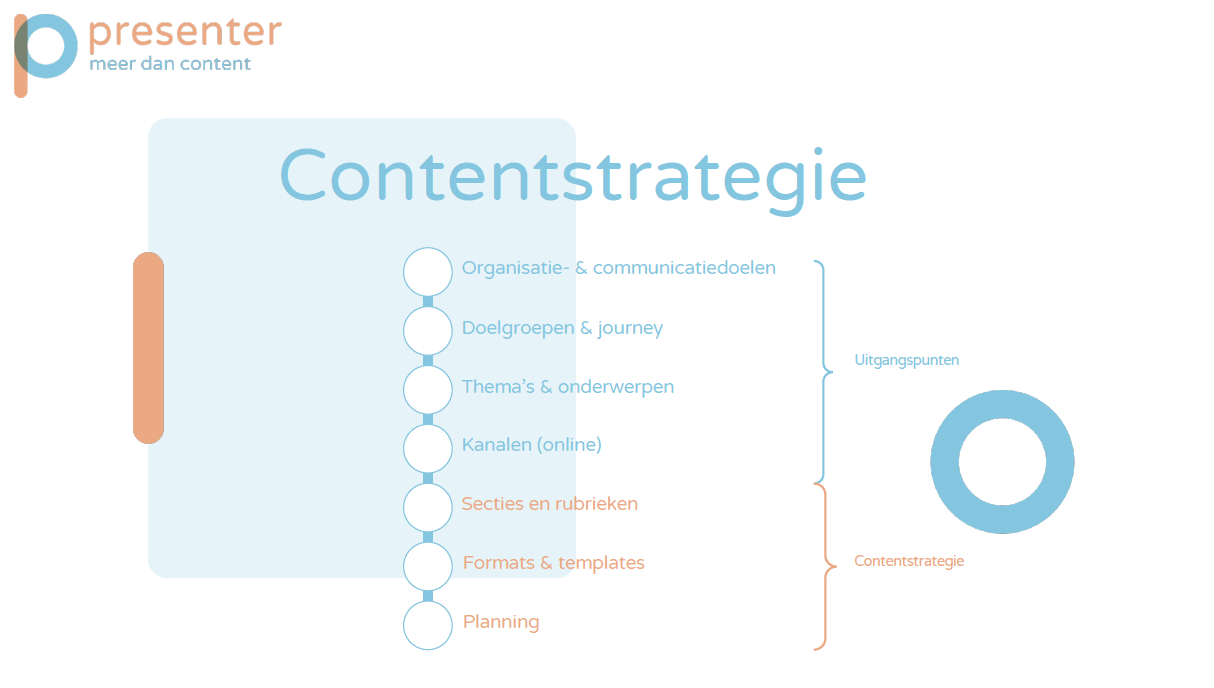
A good content strategy starts with the basics: the objectives of your organisation, your communication ambitions, and the needs of your target audience. Within that, themes, topics and channels play an important role. But to really bring that strategy to life in practice, clear formats, templates and headings are essential.
Rubrics are in fact the bridge between strategy and execution. They help make your content not only more consistent, but also more recognisable and relevant.
What is a section anyway?
A column is not a simple content format like a carousel on Instagram. It is a recurring publication with a recognisable format, fixed frequency, clear intention and a strategic function. So a content format is actually an elaboration of a heading. A rubric can have several content formats and these content formats can also differ by channel.
A column is a recurring publication with a recognisable format, a fixed frequency, a clear purpose and a strategic function.
Here are some examples
Krispijn Smith gave the example of the well-known Viva magazine: their section 'Any Body', in which people posed nude and told their stories, became a powerful concept that was even translated to other magazines - each in their own way. Whether it involved nudity in pictures or not: the core of the column remained intact. Its recognisability, intent (personal stories) and function (connecting with readers) made it a content anchor.
Another telling example: TV Draait Door in De Wereld Draait Door. The intention was entertainment, the function retaining viewers. That is the power of a good column: it gives your audience something to look forward to and supports your organisational goals.
Why categories work
A rubric offers more than just recognition. It gives your team a foothold, prevents content fatigue and enables you to make more impact with less effort. Because you work within fixed frameworks, you don't have to reinvent the wheel every time. Three factors are very important here: frequency, intention and function.
-
Frequency: Having a regular recurrence of the column. Preferably at a fixed time and over a longer period.
-
Intention: What do you give the target group? What needs does the target group have and how do you respond?
-
Function: This is the organisational goal. What do you, as an organisation, want to achieve with the headings? You can link certain KPIs to this.
Yet in practice, things often go wrong. Many organisations publish individual blogs, share something about them on social media and leave it at that. What is missing is coherence and continuity. And therefore: an audience that comes back for the next part.
Because you work within established frameworks, you don’t have to keep reinventing the wheel.
Headings as an engine for hub and hygiene content
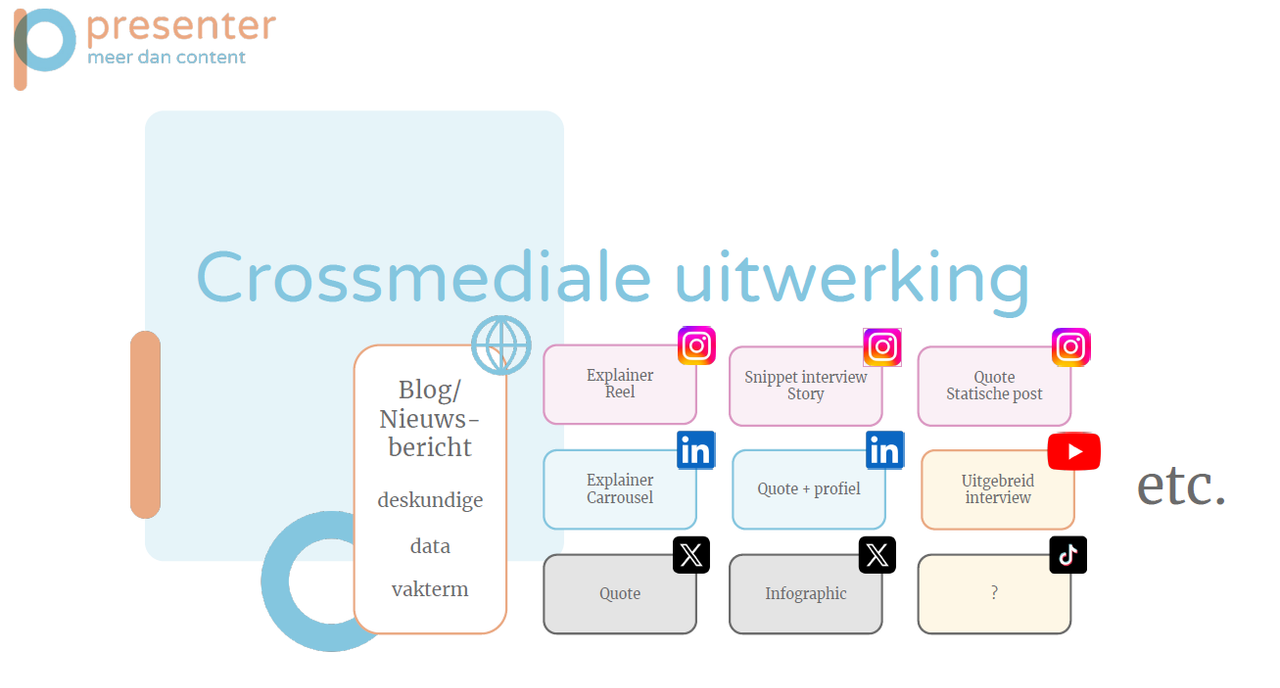
Krispijn Smith introduced the term 'hubrics' during the webinar: headings that you can extend across multiple channels and content types. They are the connecting link between your hub (regular, structural) and hygiene content (basic information and frequently asked questions).
A well-crafted section offers countless reuse possibilities. Say you are launching a new feature. You can capitalise on it with a personal user case, a video interview, a blog post, a series of social posts and maybe even an explainer video. All around one recognisable heading that revolves around user experience.
Does your blog contain a tricky concept? Create an Instagram Reel explaining it. This is a great link to a blog without directly saying: Read the whole blog. By using cross-media, you build a content ecosystem that strengthens, deepens and provides continuity.
Test, learn and persevere
Krispijn Smith emphasised that headings need time to land. Successful headings do not emerge after two or three publications. Test at least ten times. Only then can you really evaluate whether a heading works or needs adjustment. So give it time and stay consistent: in terms of form, content and publication timing.
And while a recognisable title can help, it is not always necessary. The strength of a column lies in its layout, structure and regularity. The more fixed elements you add, the stronger the recognition.
In conclusion: content that works, does more with less
Working with rubrics makes your content production scalable, strategic and effective, even in a time of AI-driven acceleration. Not every publication needs to be a hit, but with a clear structure, you build a lasting relationship with your audience.
Get a better grip on your content
Do you want to get a better grip on your content and spend less time on ad hoc creation? Then it is time to give headings the place they deserve, namely as a hero in your content strategy. We are happy to think along with you on this.
Discover more news